Viscosity & body
Quat system without cellulose: often 50–150 mPa·s at low shear — thin for cling. With 0.3–0.5% LANDERCOLL HPMC: 1,000–4,000 mPa·s shear-thinning for contact time + dispense.

LANDERCOLL · Biocide-compatible rheology
The active must work reliably — and the matrix around it must hold stable, visually consistent state through storage, deliver the right flow in use, keep functional ingredients evenly distributed, and survive pH ranges that destabilize most conventional thickeners.
LANDU detergent-grade HPMC is documented for stability across pH 3–11 — alkaline bleach, neutral quats, acidic descalers — in one additive system.
“Disinfectant formulations are among the most chemically demanding systems in the home care category. The additive needs to maintain viscosity, clarity, and ingredient distribution stability across a wide pH range, in the presence of active biocides, electrolytes, and surfactants — simultaneously. LANDU's detergent-grade HPMC is engineered for exactly this environment, which is why it's used in home care systems across more than 60 countries.”
— LANDU Technical Team, LANDERCOLL Application Series
Low viscosity — feels watery; consumers link thin texture to weak efficacy.
Phase separation / haze — reads as instability at shelf.
Migration / settling — inconsistent dose from first squeeze to last.
High pH / high salt — many thickeners quit in bleach-like matrices.
Disinfectant chemistry is hostile to many rheology modifiers — carbomers lose body in high electrolyte; some gums clash with quats; anionic thickeners can precipitate with cationic biocides.
HPMC is non-ionic: no adverse interaction with charged actives, salts, or typical surfactants. Documented pH 3–11, salt and electrolyte tolerance — hypochlorite, quat sprays, acidic bathroom, moderate alcohol co-solvent systems.

USD 24.8B2024
USD 38.4B2030 forecast
Global disinfectant market (MarketsandMarkets, 2025): hygiene awareness, tighter surface-disinfection expectations, and demand for products that look as effective as they are — formulation quality is on the commercial brief.
Each environment stresses thickeners differently — HPMC is positioned for broad-spectrum compatibility.
Viscosity is function: sprays need low viscosity for atomization; gels need body to cling and maintain contact time; pour-on formats need controlled flow under the rim.
Detergent-grade HPMC builds viscosity through entanglement, with shear-thinning tunable via grade and level — flows under dispensing pressure, recovers at rest.
Typical liquid use: roughly 0.1–0.8% by weight; from ~200 mPa·s for light sprays to 5,000+ mPa·s for gel surface disinfectants.

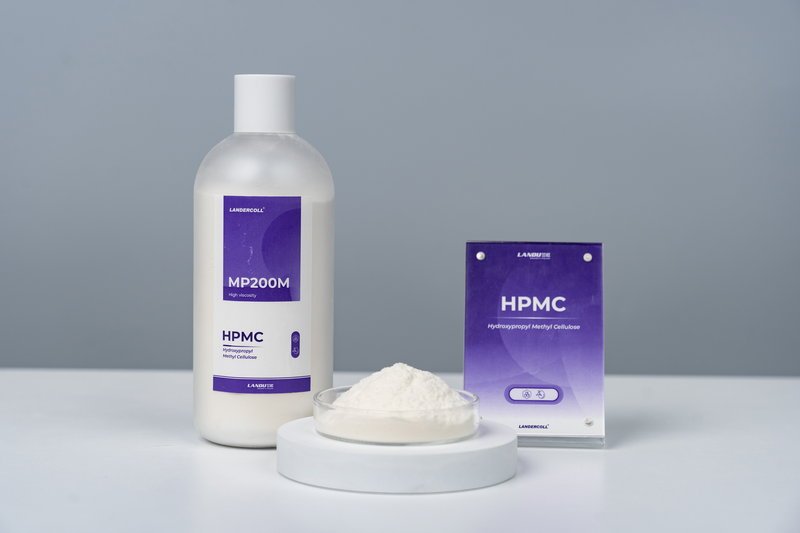
Microcapsules, opacifiers, botanicals, or partially insoluble actives settle if continuous-phase viscosity is too low — first-to-last dose drift.
LANDERCOLL household content: cellulose ether helps keep particles evenly distributed for consistent results and shelf life. For regulated minimum actives, even distribution is both quality and compliance.
Clear, smooth, consistent color signals reliability. Haze or separation raises doubt despite correct active level. Detergent-grade HPMC supports dispersion and reduced light scattering; the gap vs. generic or construction-grade HPMCs is often visible on-shelf.
Surface-treated detergent-grade HPMC disperses in cold water without clumping; target viscosity build often in under 15 minutes vs. 30–45 minutes for many standard grades — less energy, tighter batch control, easier changeovers on shared lines.

Detergent-grade HPMC as primary; HEMC/MHEC, HEC, CMC for specific actives, climate, or cleaning claims.
| Product | Primary role in disinfectant | Key technical advantage |
|---|---|---|
| HPMC Detergent grade | Viscosity, clarity, pH stability, distribution | Non-ionic; pH 3–11; cold-water dispersible; quat & bleach compatible |
| HEMC / MHEC | Rheology, thermal stability | Warm climate / high-temperature storage or use |
| HEC | Thickening in surfactant-based systems | Anionic / nonionic surfactant disinfectant blends |
| CMC | Anti-redeposition, stabilization | Reduces soil redeposition on treated surfaces |
Quat system without cellulose: often 50–150 mPa·s at low shear — thin for cling. With 0.3–0.5% LANDERCOLL HPMC: 1,000–4,000 mPa·s shear-thinning for contact time + dispense.
Hypochlorite pH 10–12: many thickeners lose viscosity in weeks. HPMC-thickened systems aim to hold contribution across the stated pH range for retail shelf targets.
Incompatible thickeners in quat systems often > 40 NTU haze. Detergent-grade HPMC supports low-haze, transparent premium positioning.
HPMC systems: more uniform active distribution through storage cycling vs. unthickened migration from density differences.
Liquid disinfectants, surface sprays, gels, bathroom disinfectant cleaners, and other biocidal home care — if you need viscosity, stability, and distribution, LANDU's detergent-grade HPMC portfolio warrants direct technical dialogue.
Grade depends on active system, viscosity target, pH, electrolytes, clarity, alcohol if any, and process. Recommendations, samples, and technical process reports for validation before volume.
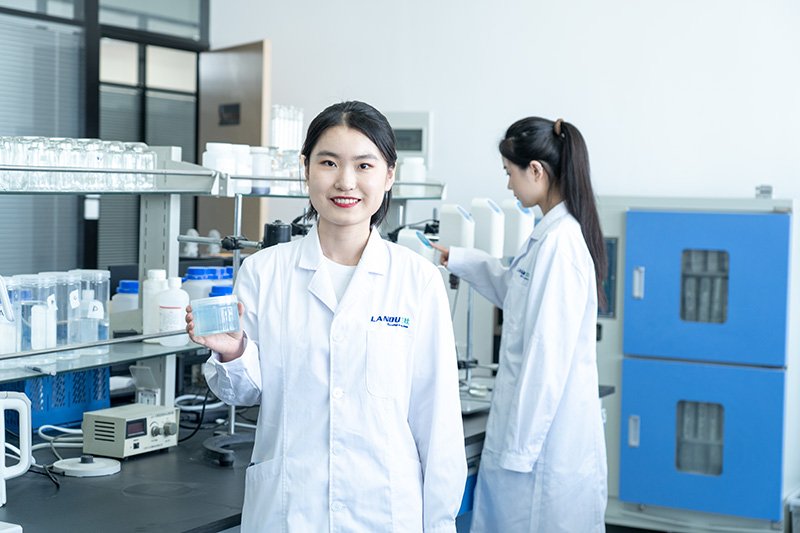
Viscosity control, clarity, stability across pH, consistent actives — LANDU pairs grades with technical support.
500+ manufacturers across 60+ countries trust LANDERCOLL for home care.
Detergent-grade HPMC: viscosity, shear-thinning, transparency, pH 3–11, salt/electrolyte tolerance, distribution — non-ionic compatibility with common quat, hypochlorite, and acid systems.
Disinfectants span ~pH 2–4 through ~10–13. Many thickeners fail outside narrow windows. HPMC is documented to maintain contribution and compatibility across pH 3–11.
Yes — non-ionic HPMC avoids complexation issues common with anionic thickeners in cationic quat systems; supports viscosity and clarity in quat-based formulas.
Higher continuous-phase viscosity slows sedimentation and migration; LANDERCOLL content supports even particle distribution — relevant where labeled active must be met dose-to-dose.
Roughly 0.1–0.8% by weight often maps from ~200 mPa·s (light spray) to 5,000+ mPa·s (gel), with shear-thinning for cling and dispense.
Good compatibility at moderate alcohol levels common in sprays and sanitizers; high alcohol requires formula-specific validation — LANDU can advise on grade and level.
Depends on actives, viscosity target, pH, electrolytes, alcohol, clarity, and process. Technical inquiry → recommendations, samples, process reports — no commitment.