Facial Mask Formulation Additives — Texture, Rheology & Stability Solutions

Facial masks sit at the premium end of the personal care category — and consumers treat them that way. This isn't a daily-use rinse-off product where the experience is measured in seconds. A facial mask is a ritual. The consumer applies it deliberately, leaves it on for 10–20 minutes, and pays close attention to every sensory detail: how it spreads across the skin, whether it stays in place or slides, how it feels during wear, and what the skin feels like after removal or rinsing.

Every one of those sensory moments is a formulation decision. And the rheology additive you choose sits at the center of all of them.

The formulation challenge is genuinely complex. Facial mask formats span an enormous range — from lightweight hydrogel sheet masks to thick clay-based wash-off masks, peel-off film formers, sleeping masks, and cream-format overnight treatments. Each format has a different viscosity target, a different application behavior requirement, and a different set of compatibility constraints. A thickener that works beautifully in a hydrogel mask may be completely wrong for a clay-based formula.

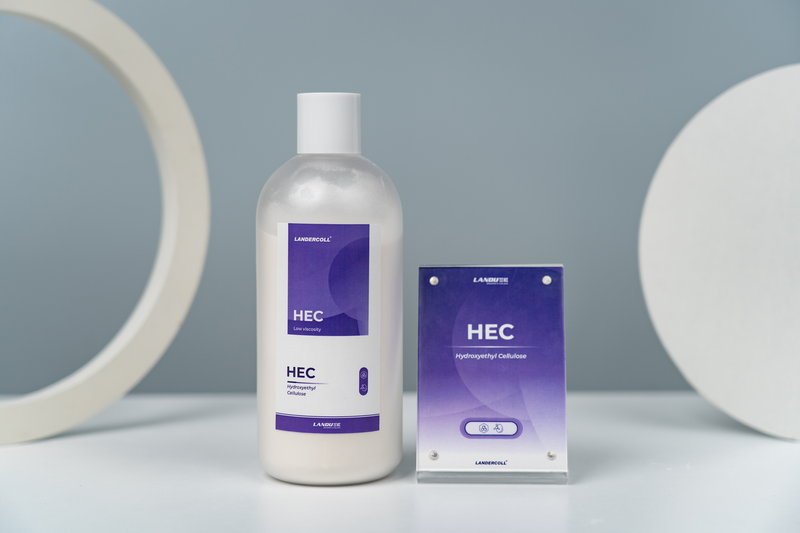
LANDU's HEC, HPMC, and HEMC/MHEC from the LANDERCOLL personal care portfolio give facial mask formulators a complete selection framework. Each product brings a different combination of viscosity profile, texture contribution, film-forming behavior, and stability characteristics — and LANDU's technical team supports the grade selection conversation with free samples and formulation guidance tailored to your specific mask format.

Woman Receiving Facial Treatment In Spa Setting 2026 03 24 06 28 56 Utc
Redlemon Happy Young Woman With Cosmetic Mask On Face And T 2026 03 12 23 51 45 Utc Compressed
Redlemon Hairbrush And Shampoo In Bathroom Setting 2026 03 27 01 22 41 Utc Compressed
Redlemon Cosmetic Products In A Minimalist Beauty Still Lif 2026 03 19 03 04 01 Utc Compressed

“Facial mask formulation is where texture engineering and skin science intersect most directly. The thickener has to build the right rheology for the specific mask format, maintain stability across the product's full shelf life, support even spreading without slippage, and contribute to the skin feel during and after wear. LANDU's HEC, HPMC, and HEMC/MHEC cover the full range of facial mask formulation targets.”

— LANDU Technical Team, LANDERCOLL Application Series

Why Do Facial Mask Formulas Fall Short Without the Right Additive?

The failure modes in facial mask formulation are format-specific — but they share a common root cause. Too thin, and a wash-off mask runs down the face during application. Too stiff, and a cream mask is difficult to spread evenly and feels uncomfortable on the skin. Phase separation during storage makes the product look unstable before it's even opened. A peel-off mask that doesn't form a coherent film is simply unusable.

Not gonna lie — facial mask formulation is one of the more technically demanding areas in personal care, precisely because the product stays on the skin for an extended period. Any formulation instability, any uncomfortable texture, any visual inconsistency is amplified by that extended contact time. Consumers notice everything.

Redlemon Partial View Of Female Hand Near Cream Container W 2026 03 13 00 54 17 Utc Compressed
Redlemon Cosmetic Bottles With Soap And Berries 2026 03 24 15 21 30 Utc Compressed

USD 8.9B 2024

USD 14.7B 2030

Grand View Research, 2025 — premium and functional formats — including hydrogel, bio-cellulose, and active-ingredient-loaded cream masks — growing at above-average rates. Premium facial mask positioning is built almost entirely on sensory experience and perceived efficacy — both of which start with the right rheology additive.

Science Equipment For Scientific Research On Light 2026 03 27 00 27 16 Utc

Cellulose ether thickeners from LANDU — HEC, HPMC, and HEMC/MHEC — are non-ionic polymers that build viscosity through polymer chain entanglement in the aqueous phase. They're compatible with the wide range of active ingredients, humectants, botanical extracts, and skin conditioning agents used in modern facial mask formulation. And they deliver the specific rheological behaviors — smooth spreadability, stable structure, controlled film formation — that different facial mask formats require.

What Does a High-Performance Facial Mask Formulation Actually Need?

  • Format-matched rheology
  • Shelf & active stability
  • Wear-time skin feel
Redlemon Relaxed Woman Receiving Facial Mask In Spa 2026 03 18 05 19 07 Utc Compressed
Landu Hydroxyethyl Cellulose Product Powder Sample

How Do You Build the Right Texture for Different Facial Mask Formats?

Facial mask viscosity and texture targets vary more dramatically than almost any other personal care category. A lightweight hydrogel mask might target 5,000–10,000 mPa·s for a fluid, skin-conforming texture. A cream wash-off mask might target 20,000–50,000 mPa·s for a rich, stay-in-place application. A sleeping mask or overnight treatment might go higher still — 60,000–100,000 mPa·s for a thick, occlusive texture that signals intensive care.

Hydrogel
5–10k
Cream wash-off
20–50k
Sleeping / overnight
60–100k

HEC is the primary recommendation for facial mask systems where smooth, controlled rheology and broad ingredient compatibility are the priority. At typical use levels of 0.5–2.0% by weight, LANDERCOLL HEC produces viscosity across the full range of standard facial mask targets, with a smooth pseudoplastic flow profile that spreads easily under the light shear of application and recovers body at rest — exactly the behavior needed for a mask that applies smoothly but stays in place during wear.

HPMC is a strong option where stronger product body, richer texture, or specific film-forming behavior is required. Its viscosity contribution tends toward a more structured feel at equivalent use levels compared to HEC — which makes it particularly relevant for cream-format masks, peel-off film systems, and sleeping masks where a more substantial, stay-in-place texture is part of the product experience. HPMC's film-forming properties are especially valuable in peel-off mask formulations, where the ability to form a coherent, flexible film is a core functional requirement.

HEMC/MHEC rounds out the selection with enhanced thermal stability — useful for facial mask products targeting warm-climate markets or requiring consistent texture performance across a wide storage temperature range.
How Do You Achieve Smooth, Even Spreadability Without Slippage?

Redlemon White Soap Dispenser Surrounded By White Foam Bubb 2026 03 24 04 15 27 Utc Compressed
Redlemon Smiling Woman With Cleansing Foam On Her Face 2026 01 06 00 28 29 Utc Compressed

Spreadability in a facial mask is a specific and demanding rheological requirement. The product needs to spread evenly across the contours of the face under light finger pressure — conforming to the nose, chin, and forehead without requiring excessive mechanical effort. But once applied, it needs to stay in place. A mask that slides or runs during the wear period is commercially unacceptable.

This is a classic shear-thinning requirement. Under the shear of application, viscosity drops and the product spreads freely. When shear is removed, viscosity recovers and the product holds its position on the skin surface.

HEC's pseudoplastic flow behavior delivers exactly this profile. The product holds its body in the jar or tube, spreads easily under application pressure, and recovers structure once the shear of spreading stops. This behavior is what gives a well-formulated facial mask its characteristic smooth, controlled application feel — the sensation that consumers describe as the product “melting into” the skin surface without running.

The trick is matching the HEC grade to the specific mask format. A lightweight hydrogel mask needs a lower molecular weight grade for a more fluid application profile. A thick cream mask needs a higher molecular weight grade for a more structured, stay-in-place texture. LANDU's technical team supports this grade selection conversation directly.

How Do You Support Skin Feel During and After Mask Wear?

Skin feel during and after mask wear is the primary driver of consumer satisfaction — and repurchase — in the facial mask category. A mask that feels comfortable during the 15–20 minute wear period, rinses or peels cleanly without residue, and leaves skin feeling smooth, hydrated, and visibly improved drives strong consumer loyalty.

HEC's non-ionic character means it doesn't leave a charged residue on the skin surface after rinsing. At the use levels typical in facial mask formulation, HEC contributes a light, smooth after-feel as the formula is removed — which consumers perceive as skin feeling clean and comfortable rather than stripped or coated.

HPMC's film-forming properties add a complementary dimension that's particularly valuable in facial mask applications. During the wear period, HPMC can contribute a light occlusive film that supports active ingredient penetration and helps maintain skin hydration — a functional contribution that aligns directly with the moisturizing and treatment claims that premium facial masks carry. After removal, this film-forming behavior contributes to the smooth, slightly plumped skin feel that consumers associate with effective mask performance.

Redlemon Woman Cleansing Her Face With A Gentle Wash 2026 03 18 11 55 06 Utc Compressed

How Do You Maintain Stability in a Complex Facial Mask System?

Facial mask stability is a multi-variable challenge that's amplified by the complexity of modern mask formulations. Premium facial masks often contain high concentrations of active ingredients — hyaluronic acid, niacinamide, vitamin C derivatives, peptides, botanical extracts — that can interact with thickener systems and cause viscosity drift, phase separation, or discoloration over time.

LANDERCOLL positions HEC, HPMC, and HEMC/MHEC as stabilizing materials in personal care systems. Their polymer network contributions help maintain the structural integrity of the facial mask matrix during storage — resisting the viscosity drift and phase separation that can develop in complex active-ingredient systems over extended shelf life.

Both HEC and HPMC are compatible with the humectants, emollients, and active ingredients commonly used in facial mask formulation — including glycerin, propylene glycol, niacinamide, and hyaluronic acid. HPMC's documented pH stability from pH 3 to 11 covers the full range of facial mask chemistry, including vitamin C-containing formulas that require a lower pH for stability.

For facial mask manufacturers targeting 24–36 month shelf life, this stabilization contribution is a direct commercial requirement. A premium mask that shows visible separation or texture change at the 12-month mark doesn't survive the retail environment.

How Do You Ensure Consistent Appearance and Visual Quality?

Redlemon Beautiful Relaxed Woman Having White Clay Face Mas 2026 01 07 05 44 42 Utc Compressed
Redlemon Pink Cosmetic Bottle Surrounded By Geometric Shape 2026 03 09 06 08 05 Utc Compressed
Redlemon Young Beautiful Woman Washing Her Face With Hands 2026 01 07 23 38 31 Utc Compressed

Facial mask products are highly visual — they're purchased based on appearance as much as claims. A clear hydrogel mask that shows haze or cloudiness, a cream mask with visible phase separation, or a peel-off mask with an uneven, lumpy texture all signal poor formulation quality before the consumer even tries the product.

HEC forms clear solutions in aqueous systems when properly hydrated, making it suitable for transparent hydrogel mask formulations where visual clarity is a hard requirement. HPMC offers transparency-related benefits in personal care systems and can contribute to the smooth, uniform appearance of cream-format masks. Both products maintain their visual contribution across storage temperature cycling — a critical requirement for facial mask products distributed through premium retail channels.

Which LANDU Products Are Most Relevant for Facial Mask Formulations?

ProductPrimary Role in Facial MaskKey Technical Advantage
HECPrimary thickener, rheology modifierNon-ionic; pseudoplastic flow; clear solutions; compatible with actives; clean skin rinse
HPMCViscosity building, film forming, texture controlFilm-forming; pH stable 3–11; richer texture; occlusive contribution during wear
HEMC / MHECRheology modification with thermal stabilityEnhanced stability in warm climates; consistent texture across temperature range
CMCSystem stabilization supportSecondary stabilizer in specific facial mask formulation systems

For most facial mask applications, HEC is the primary starting point. HPMC is a strong option where film-forming behavior, richer texture, or peel-off mask functionality is required. HEMC/MHEC is particularly relevant for facial mask products targeting warm-climate markets or requiring enhanced thermal stability. LANDU's technical team can help determine which product — or combination — best fits your specific mask format and positioning.

What Performance Improvements Can Formulators Expect?

Before and after: adding LANDU HEC or HPMC to a facial mask system.

Texture and spreadability

A cream facial mask without a cellulose thickener may show significant texture variation with temperature — stiff and difficult to spread at cool temperatures, too fluid and runny at 35°C skin temperature. With 0.8–1.5% LANDERCOLL HEC, the same formula shows a more stable pseudoplastic texture profile across the temperature range, with smooth, even spreading at all application temperatures.

Stability

Facial mask systems containing high concentrations of active ingredients often show viscosity drift of 20–40% over 12 months without adequate stabilization. HEC and HPMC polymer network contributions help maintain viscosity stability within ±15% across the target shelf life — a meaningful improvement for premium products with active ingredient claims.

Film formation

Peel-off mask formulations using HPMC show coherent, flexible film formation with good adhesion during wear and clean, complete removal — compared to formulations using alternative thickeners that may produce brittle, incomplete films.

Skin feel

Consumer panel testing on facial mask formulas consistently shows preference for non-ionic thickener systems on skin comfort during wear and smoothness after removal — a competitive advantage in the premium and sensitive-skin segments.

LANDU operates three production facilities with a combined annual capacity of 75,000 tons. The LANDERCOLL cellulose ether range is ISO 9001 certified and EU REACH compliant. Over 500 manufacturing partners in 60+ countries rely on LANDU's personal care and daily chemical additive portfolio.

75,000 t/yr · 3 sites500+ partners · 60+ countriesISO 9001 · EU REACH
NOVASTAR Innovative Solution Non Surface Treated Landu Perfessional Sales Consultant

Who Is This Page For?

If you manufacture wash-off masks, peel-off masks, sleeping masks, sheet mask serums, clay masks, or other facial treatment products, and you're evaluating cellulose ether additives for texture, stability, or film-forming performance — LANDU's HEC, HPMC, and HEMC/MHEC portfolio is worth a direct technical conversation.

The right grade depends on your specific mask format, target viscosity, active ingredient system, pH range, desired application behavior, and production process. LANDU's technical team provides grade recommendations, free samples with detailed technical process reports, and formulation guidance — so you can validate performance in your own system before placing a commercial order.

Ready to Improve Your Facial Mask Formula?

If your facial mask formulation needs better texture control, smoother spreadability, stronger storage stability, improved film formation, or a more refined skin feel during and after wear, LANDU has the grade and the technical expertise to help you get there.

500+ manufacturers across 60+ countries already trust LANDERCOLL cellulose ethers for personal care and daily chemical applications. Start with a sample, a grade recommendation, or a direct technical inquiry — our team responds fast.

Frequently Asked Questions About Facial Mask Formulation Additives

Which additive is most relevant for facial mask formulations?

HEC from LANDU is the most directly applicable cellulose ether for most facial mask systems — it's non-ionic, builds smooth pseudoplastic viscosity, forms clear solutions, and rinses cleanly from skin. HPMC is the primary recommendation for peel-off mask formats where film-forming behavior is a core functional requirement, and a strong supporting option for cream and sleeping mask formats where richer texture and occlusive contribution during wear are part of the product positioning. HEMC/MHEC adds thermal stability for warm-climate applications.

What makes HPMC especially useful in peel-off facial mask formulations?

HPMC's film-forming properties are a core functional requirement in peel-off mask formulations. When applied to the skin and allowed to dry, HPMC forms a coherent, flexible film that adheres during the wear period and peels away cleanly and completely on removal. The film flexibility — which can be tuned through grade selection and use level — is critical for comfortable wear and clean removal without skin irritation. LANDU's technical team supports peel-off mask grade selection with specific recommendations based on your target film properties.

How does HEC contribute to spreadability in a facial mask?

HEC's pseudoplastic flow behavior means viscosity drops under the shear of application and recovers when shear is removed. This delivers the smooth, even spreading that facial mask application requires — the product conforms to facial contours under light finger pressure, then holds its position on the skin surface once spreading stops. At typical use levels of 0.5–2.0% by weight, LANDERCOLL HEC produces the shear-thinning profile needed for controlled, even facial mask application across a range of viscosity targets.

Can LANDU's cellulose ethers be used in facial masks containing vitamin C or other acidic actives?

Yes. HPMC's documented pH stability from pH 3 to 11 covers the lower pH range required for vitamin C derivative stability in facial mask formulations. HEC also maintains its viscosity contribution across the pH range typical of active-ingredient facial masks. Both products are compatible with the humectants, antioxidants, and botanical extracts commonly used alongside vitamin C in premium facial mask systems.

How do cellulose ether thickeners support stability in active-ingredient facial masks?

HEC and HPMC polymer network contributions help maintain the structural integrity of the facial mask matrix during storage, resisting the viscosity drift and phase separation that can develop in complex active-ingredient systems over time. Both products are compatible with high concentrations of hyaluronic acid, niacinamide, peptides, and botanical extracts — the active ingredient categories most commonly used in premium facial mask formulations. Properly stabilized systems maintain viscosity within ±15% across the target shelf life.

What viscosity range can LANDU's HEC achieve in a facial mask formula?

At typical use levels of 0.5–2.0% by weight, LANDERCOLL HEC produces viscosity ranges from approximately 5,000 mPa·s for lightweight hydrogel mask formats to 50,000+ mPa·s for rich cream or sleeping mask products. The specific viscosity grade — determined by molecular weight — controls where in that range the formula lands. Grade selection should be based on your specific mask format, target viscosity, and desired application behavior.

How do I select the right LANDU grade for my facial mask formula?

Grade selection depends on your specific mask format, target viscosity, active ingredient system, pH range, desired application behavior, film-forming requirements if applicable, and production process. LANDU's technical team provides grade recommendations based on your specific parameters, along with free samples and detailed technical process reports for performance validation before commercial order. Submit a technical inquiry to start the conversation — no commitment required.