Facial Cleanser Formulation Additives — Texture, Rheology & Stability Solutions

Redlemon Beautiful Relaxed Woman Having White Clay Face Mas 2026 01 07 05 44 42 Utc Compressed
Redlemon Composition With Hair Care Products On Wooden Back 2026 03 24 23 15 40 Utc Compressed
Redlemon Spa Day Essentials Basket With Lilac Flowers 2026 03 26 07 59 14 Utc Compressed

Facial cleansers occupy a uniquely demanding position in the personal care category. They're used twice daily, directly on the most sensitive and visible skin on the body, and consumers have strong opinions about every sensory detail. The way a cleanser dispenses from the pump or tube. Whether it foams immediately or requires working in. How it feels on wet skin — slippery, cushioned, or slightly draggy. Whether it rinses completely clean or leaves a film. How the skin feels 30 seconds after rinsing.

All of that happens in under 60 seconds, twice a day, every day. And every sensory detail is a formulation decision.

The challenge for facial cleanser formulators is that you're working in a high-surfactant system that has to cleanse effectively, feel gentle enough for facial skin, look appealing in the package, and stay stable for 18–24 months — all while delivering the specific texture profile that matches your product's market positioning. A foaming gel cleanser, a cream cleanser, a micellar gel, and a balm-to-milk cleanser each require a completely different rheology approach. And the thickener you choose determines whether you hit that target or spend months reformulating.

LANDU's HEC, HPMC, and HEMC/MHEC from the LANDERCOLL personal care portfolio give facial cleanser formulators a complete and flexible selection framework. Each product brings a different combination of viscosity profile, texture contribution, compatibility characteristics, and processing behavior — and LANDU's technical team supports the grade selection conversation with free samples and formulation guidance tailored to your specific cleanser format.
“Facial cleanser formulation is where surfactant science and sensory engineering meet most directly. The thickener has to build the right viscosity in a surfactant-heavy, pH-variable system, deliver a smooth dispensing and application profile, support the skin feel that the product's claims promise, and maintain visual consistency across the full shelf life. LANDU's HEC, HPMC, and HEMC/MHEC cover the complete range of facial cleanser formulation targets.”

— LANDU Technical Team, LANDERCOLL Application Series
Redlemon Hairbrush And Shampoo In Bathroom Setting 2026 03 27 01 22 41 Utc Compressed
Redlemon Happy Young Woman With Cosmetic Mask On Face And T 2026 03 12 23 51 45 Utc Compressed

Why Do Facial Cleanser Formulas Underperform Without the Right Additive?

The failure modes in facial cleanser formulation are predictable once you've seen enough of them. A gel cleanser that's too thin feels cheap and unconvincing — consumers assume it won't cleanse thoroughly. A cream cleanser that's too stiff is difficult to dispense and doesn't spread evenly on wet skin. A foaming cleanser with poor rheology produces uneven lather that doesn't distribute across the face. And a cleanser that leaves any kind of residue — tight, tacky, or filmy — after rinsing gets one use and a negative review.

Most of these failures trace back to the same root cause: a thickener that wasn't designed for the specific chemistry of a facial cleanser system. Facial cleansers typically operate at pH 4.5–6.5 to respect the skin's natural acid mantle. They contain anionic, amphoteric, and increasingly nonionic surfactant blends. Many include skin-conditioning actives — niacinamide, panthenol, hyaluronic acid, botanical extracts — that can interact with charged thickener systems.

Here's the thing: a thickener that works in a body wash or shampoo may behave completely differently in a facial cleanser system. The lower pH, the specific surfactant blend, and the presence of skin-active ingredients all change the formulation environment in ways that affect thickener performance.

USD 16.8B 2024

USD 24.3B 2030

Mordor Intelligence, 2025 — premium formats — including gentle, microbiome-friendly, and active-ingredient-enriched cleansers — growing at above-average rates. Premium facial cleanser positioning is built on sensory differentiation and skin compatibility, and both start with the right rheology additive.

What Does a High-Performance Facial Cleanser Formulation Actually Need?

  • Micellar / water-light
  • Foaming gel
  • Cream cleanser
  • Balm / oil transform

How Do You Build the Right Viscosity for Different Facial Cleanser Formats?

Facial cleanser viscosity targets vary significantly by format and market positioning. A lightweight micellar gel might target 2,000–5,000 mPa·s for a fluid, water-like texture that signals gentleness. A foaming gel cleanser might target 6,000–12,000 mPa·s for a smooth, controlled dispensing profile. A cream cleanser might target 15,000–30,000 mPa·s for a rich, cushioned texture that signals moisturizing performance. A balm-to-milk or oil-to-foam cleanser requires a completely different rheology approach — one where the product transitions from a structured phase to a fluid emulsion on contact with water.

Redlemon Young Beautiful Woman Washing Her Face With Hands 2026 01 07 23 38 31 Utc Compressed
Micellar gel
2–5k
Foaming gel
6–12k
Cream
15–30k

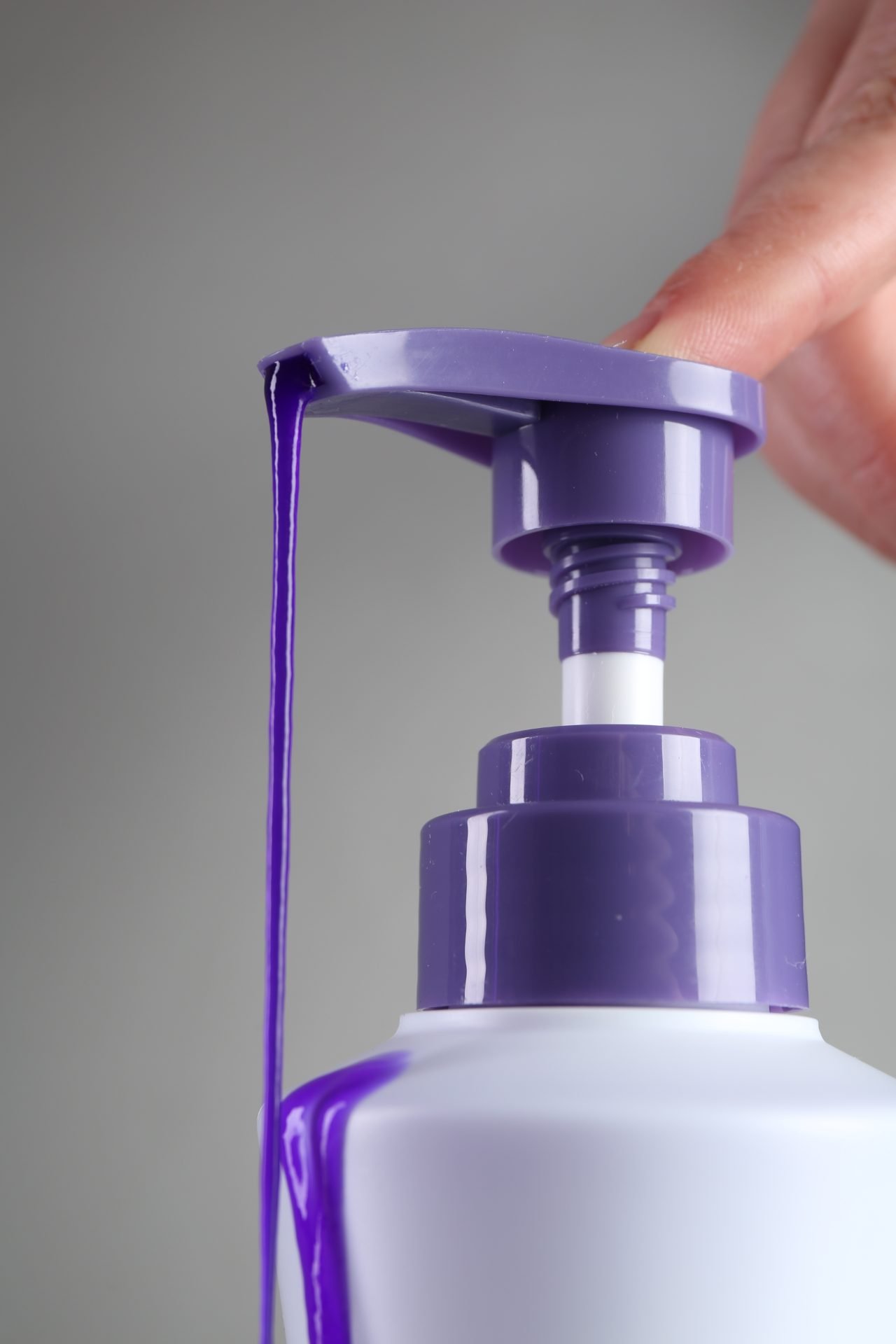
HEC is the primary recommendation for most facial cleanser applications. At typical use levels of 0.3–1.5% by weight, LANDERCOLL HEC produces viscosity across the full range of standard facial cleanser targets, with a smooth pseudoplastic flow profile that's well-suited to the dispensing and application requirements of the category. The pseudoplastic behavior — viscosity drops under shear during dispensing and spreading, recovers at rest — is what gives a well-formulated facial cleanser its characteristic smooth, controlled flow and even application across wet skin.

HPMC is a strong supporting option where stronger product body, richer texture, or specific film-forming behavior is required. Its viscosity contribution tends toward a more structured feel at equivalent use levels compared to HEC — which makes it particularly relevant for cream cleanser formats and balm-type cleansers where a more substantial, cushioned texture is part of the premium positioning.

HEMC/MHEC adds enhanced thermal stability where warm-climate distribution or temperature-sensitive texture performance is part of the brief — complementary to HEC and HPMC across shared production lines.

How Do You Achieve the Gentle, Skin-Compatible Feel That Facial Cleansers Demand?

Facial skin is more sensitive than body skin — thinner, with a more active microbiome and a tighter pH tolerance. A thickener that's perfectly acceptable in a body wash may feel slightly irritating or drying on facial skin at the same use level. This is where the non-ionic character of LANDU's cellulose ether thickeners becomes a genuine formulation advantage.

HEC, HPMC, and HEMC/MHEC are all non-ionic polymers. They don't carry a charge that could interact with skin proteins, disrupt the skin's acid mantle, or interfere with the cationic conditioning agents that many facial cleansers include for after-feel improvement. They rinse cleanly from skin without leaving a charged residue — which contributes directly to the clean, comfortable after-feel that premium facial cleanser consumers expect.

Honestly, this is one of the most underappreciated advantages of cellulose ether thickeners in facial cleanser formulation. The non-ionic character isn't just a compatibility benefit — it's a skin compatibility benefit. And in a category where “gentle” is one of the most commercially important claims, that matters.

Redlemon Soaps Shampoos And White Towels For Spa 2026 01 09 07 25 14 Utc Compressed
Redlemon Extreme Close Up Of Purple Liquid Dripping From A 2026 05 07 20 17 17 Utc Compressed

How Do You Maintain Clarity and Visual Consistency in a Facial Cleanser?

For clear or translucent facial cleanser formats — gel cleansers, micellar gels, transparent foaming cleansers — visual consistency is a hard commercial requirement. A hazy or phase-separated product fails the shelf test and signals poor formulation quality before the consumer reads a single claim.

HEC forms clear solutions in aqueous surfactant systems when properly hydrated, making it the primary recommendation for transparent facial cleanser formulations. HPMC also offers transparency-related benefits in personal care systems and can contribute to the smooth, uniform appearance of cream-format cleansers.

Both products maintain their clarity contribution across storage temperature cycling — a critical requirement for facial cleanser products distributed through premium retail channels where storage conditions vary. LANDU's cellulose ether grades for personal care are designed for efficient cold-water processing, which translates to more consistent batch-to-batch clarity in the finished product.

How Do You Keep a Facial Cleanser Stable Across pH and Active Ingredient Systems?

Facial cleanser stability is complicated by two factors that don't apply to most other personal care categories. First, the lower pH range (4.5–6.5) that facial cleansers require for skin compatibility rules out many conventional thickeners that only perform well at neutral to alkaline pH. Second, the increasing prevalence of active ingredients — niacinamide, vitamin C derivatives, AHA/BHA acids, peptides — creates a complex chemical environment that can interact with charged thickener systems.

HPMC's documented pH stability from pH 3 to 11 covers the complete range of facial cleanser chemistry, including AHA-containing exfoliating cleansers that may operate at pH 3.5–4.5. HEC maintains its viscosity contribution across the pH range typical of facial cleansers (pH 4.5–6.5). Both products are compatible with the active ingredients commonly used in premium facial cleansers — including niacinamide, panthenol, hyaluronic acid, and botanical extracts.

For facial cleanser manufacturers developing products with multiple active ingredient claims, this broad compatibility reduces the risk of interaction-related stability problems and gives formulators more flexibility in building complex systems.

Photo 1556228720 195a672e8a03

How Do You Improve Manufacturing Efficiency in Facial Cleanser Production?

Processing efficiency matters in facial cleanser manufacturing for the same reason it matters across all personal care production: if your thickener requires hot water dissolution, extended mixing time, or careful pH adjustment, it adds cost and complexity to every batch.

LANDU's cellulose ether grades for personal care are designed for efficient cold-water processing. They disperse without clumping and hydrate to their target viscosity without requiring elevated temperatures or extended mixing times. For facial cleanser manufacturers running multiple formulation types — different formats, different viscosity targets, different active ingredient systems — on shared production lines, this processing flexibility reduces changeover complexity and supports more consistent batch quality.

Which LANDU Products Are Most Relevant for Facial Cleanser Formulations?

ProductPrimary Role in Facial CleanserKey Technical Advantage
HECPrimary thickener, rheology modifierNon-ionic; pseudoplastic flow; clear solutions; skin-compatible; clean rinse
HPMCViscosity building, texture and body controlFilm-forming; pH stable 3–11; richer texture; compatible with AHA/BHA systems
HEMC / MHECRheology modification with thermal stabilityEnhanced stability in warm climates; consistent texture across temperature range
CMCSystem stabilization supportSecondary stabilizer in specific facial cleanser formulation systems

For most facial cleanser applications, HEC is the primary starting point. HPMC is a strong option where richer texture, stronger product body, AHA compatibility, or film-forming behavior is required. HEMC/MHEC is particularly relevant for facial cleanser products targeting warm-climate markets or requiring enhanced thermal stability. LANDU's technical team can help determine which product — or combination — best fits your specific cleanser format and positioning.

What Performance Improvements Can Formulators Expect?

Before and after: adding LANDU HEC or HPMC to a facial cleanser system.

Viscosity and consistency

A sodium laureth sulfate-based facial gel cleanser relying solely on salt thickening may show viscosity variation of ±25–30% batch to batch. With 0.5–1.0% LANDERCOLL HEC as the primary thickener, the same formula achieves target viscosity with batch-to-batch variation below ±10% — a meaningful improvement for quality-controlled manufacturing at scale.

pH stability

In AHA-containing facial cleansers at pH 3.5–4.5, many conventional thickeners show significant viscosity loss within 8–12 weeks. HPMC-thickened systems maintain their viscosity contribution across this pH range, supporting the shelf life targets required for active-ingredient facial cleanser products.

Visual clarity

HEC-thickened facial cleanser systems maintain clear, consistent appearance across storage temperature cycling (5°C to 45°C), compared to salt-thickened systems that may show cloudiness at low temperatures.

Skin feel

Non-ionic thickener systems show measurably cleaner rinse profiles in facial cleanser applications compared to systems using charged thickeners, with lower residue perception and higher skin comfort scores in consumer panel testing — a competitive advantage in the premium and sensitive-skin segments.

LANDU operates three production facilities with a combined annual capacity of 75,000 tons. The LANDERCOLL cellulose ether range is ISO 9001 certified and EU REACH compliant. Over 500 manufacturing partners in 60+ countries rely on LANDU's personal care and daily chemical additive portfolio.

75,000 t/yr · 3 sites500+ partners · 60+ countriesISO 9001 · EU REACH
DSC7329 拷贝 Landu Professional Service

Who Is This Page For?

If you manufacture facial gel cleansers, cream cleansers, foaming cleansers, micellar gels, exfoliating cleansers, or other facial cleansing products, and you're evaluating cellulose ether additives for texture, stability, or skin compatibility — LANDU's HEC, HPMC, and HEMC/MHEC portfolio is worth a direct technical conversation.

The right grade depends on your specific cleanser format, target viscosity, surfactant system, pH range, active ingredient package, and production process. LANDU's technical team provides grade recommendations, free samples with detailed technical process reports, and formulation guidance — so you can validate performance in your own system before placing a commercial order.

Ready to Improve Your Facial Cleanser Formula?

If your facial cleanser formulation needs better viscosity control, a smoother flow and application profile, more consistent batch-to-batch appearance, improved active ingredient compatibility, or a more refined consumer skin feel, LANDU has the grade and the technical expertise to help you get there.

500+ manufacturers across 60+ countries already trust LANDERCOLL cellulose ethers for personal care and daily chemical applications. Start with a sample, a grade recommendation, or a direct technical inquiry — our team responds fast.

Frequently Asked Questions About Facial Cleanser Formulation Additives

Which additive is most relevant for facial cleanser formulations?

HEC from LANDU is the most directly applicable cellulose ether for most facial cleanser systems. It's non-ionic, compatible with anionic and amphoteric surfactant systems, builds smooth pseudoplastic viscosity, forms clear solutions, and rinses cleanly from facial skin without residue. HPMC is a strong supporting option where richer texture, stronger product body, AHA/BHA compatibility, or film-forming behavior is required. HEMC/MHEC adds thermal stability for warm-climate markets or specific formulation requirements.

Why is pH stability important in facial cleanser formulation?

Facial cleansers typically operate at pH 4.5–6.5 to respect the skin's natural acid mantle — a lower range than most other personal care products. Many conventional thickeners lose viscosity or become unstable outside a neutral to alkaline pH window. HPMC's documented pH stability from pH 3 to 11 covers the complete range of facial cleanser chemistry, including AHA-containing exfoliating cleansers at pH 3.5–4.5. HEC maintains viscosity contribution across the pH range typical of standard facial cleansers.

How does HEC contribute to the skin feel of a facial cleanser?

HEC's non-ionic character means it rinses cleanly from facial skin without leaving a charged residue that could interact with skin proteins or disrupt the skin's acid mantle. At the use levels typical in facial cleanser formulation, HEC contributes a clean, comfortable after-feel as the formula rinses away — which consumers perceive as skin feeling clean and balanced rather than tight, stripped, or filmy. This non-ionic skin compatibility is particularly valuable in facial cleanser formulas with sensitive-skin or microbiome-friendly claims.

Can LANDU's cellulose ethers be used in AHA or BHA exfoliating facial cleansers?

Yes. HPMC's documented pH stability from pH 3 to 11 makes it suitable for AHA-containing exfoliating cleansers that operate at pH 3.5–4.5 — a range where many conventional thickeners lose performance. HEC also maintains its viscosity contribution across the pH range of most AHA/BHA cleansers. Both products are compatible with glycolic acid, lactic acid, salicylic acid, and the other exfoliating actives commonly used in this cleanser category.

What viscosity range can LANDU's HEC achieve in a facial cleanser formula?

At typical use levels of 0.3–1.5% by weight, LANDERCOLL HEC produces viscosity ranges from approximately 2,000 mPa·s for lightweight micellar gel formats to 30,000+ mPa·s for rich cream cleanser products. The specific viscosity grade — determined by molecular weight — controls where in that range the formula lands. Grade selection should be based on your specific cleanser format, target viscosity, surfactant system, and desired sensory profile.

Is LANDU's HEC compatible with niacinamide and other skin-active ingredients in facial cleansers?

Yes. HEC's non-ionic character makes it broadly compatible with the skin-active ingredients commonly used in premium facial cleansers — including niacinamide, panthenol, hyaluronic acid, peptides, and botanical extracts. It doesn't form complexes with these ingredients or cause the interaction-related stability problems that can occur with charged thickener systems. This broad active ingredient compatibility gives formulators more flexibility in building complex facial cleanser systems with multiple functional claims.

How do I select the right LANDU grade for my facial cleanser formula?

Grade selection depends on your specific cleanser format, target viscosity, surfactant system, pH range, active ingredient package, clarity requirements, desired sensory profile, and production process. LANDU's technical team provides grade recommendations based on your specific parameters, along with free samples and detailed technical process reports for performance validation before commercial order. Submit a technical inquiry to start the conversation — no commitment required.