LANDERCOLL · Hair care rheology

Shampoo Formulation Additives — Viscosity, Texture & Rheology Solutions

Shampoo is one of the most sensory-driven products in the personal care category. Consumers don't evaluate it purely on cleaning performance — they evaluate it on how it pours from the bottle, how it lathers and spreads through wet hair, how it rinses clean, and how their hair feels afterward. Every one of those sensory touchpoints is influenced by the rheology of the formula. Get the viscosity profile wrong, and a shampoo that cleans perfectly will still lose to a competitor whose product simply feels better in the shower.

You are engineering experience in surfactant-heavy, pH-variable, electrolyte-sensitive systems — batch after batch. LANDU's HEC and HPMC from the LANDERCOLL personal care portfolio are the two most directly applicable product directions for shampoo formulations: HEC delivers smooth, controlled rheology in anionic surfactant systems; HPMC offers complementary viscosity building and texture support where a different flow profile or product body is the target. Together, they give shampoo formulators a complete selection framework for building products that perform and feel exactly right.

That's the formulation reality that makes thickener selection in shampoo development so consequential. You're not just building viscosity — you're engineering a complete sensory experience across a surfactant-heavy, pH-variable, potentially electrolyte-loaded system. And the additive you choose has to deliver consistent performance across all of it, from the first batch to the thousandth, from the factory to the consumer's bathroom shelf.

Redlemon Soaps Shampoos And White Towels For Spa 2026 01 09 07 25 14 Utc Compressed

“Shampoo rheology is more complex than most formulators expect at the outset. The thickener has to build viscosity in a high-surfactant, salt-sensitive system, maintain clarity and visual consistency, deliver a smooth pour and lather profile, and contribute to the after-feel that drives consumer repurchase. LANDU's HEC and HPMC are specifically engineered for personal care systems where all of these requirements apply at once.”

— LANDU Technical Team, LANDERCOLL Application Series

Why Do Shampoo Formulas Underperform Without the Right Additive?

The most common shampoo formulation problems — thin watery texture, inconsistent viscosity batch to batch, haze or cloudiness in a clear formula, poor lather distribution, or a draggy after-feel — almost always trace back to thickener selection or thickener-system compatibility.

Here's something most formulators learn the hard way: anionic surfactant systems, which form the backbone of most shampoo formulas, are highly sensitive to the type and concentration of thickener used. Salt thickening — adding sodium chloride to boost viscosity in sodium lauryl or laureth sulfate systems — works up to a point, then causes viscosity to drop sharply as the salt curve peaks. Relying solely on salt response gives you a narrow formulation window and poor batch-to-batch consistency.

Cellulose ether thickeners — specifically HEC and HPMC from LANDU — offer a more controlled and predictable approach. They build viscosity through polymer chain entanglement rather than salt-surfactant interaction, which means their contribution is more stable, more consistent, and less sensitive to the electrolyte variations that cause salt-thickened systems to drift.

Salt thickening hits a wall

NaCl can boost SLES/SLS viscosity — until the curve peaks; past that, viscosity collapses. Narrow window, batch drift when salt varies.

HEC / HPMC: entanglement control

Cellulose ethers build viscosity through chain entanglement, less hostage to electrolyte swing — more predictable targets and QC.

USD 31.7B 2024

USD 42.3B 2030

The global shampoo market was valued at USD 31.7 billion in 2024 and is projected to reach USD 42.3 billion by 2030 (Grand View Research, 2025), with premium and salon-quality formats growing fastest. Premium positioning in shampoo is built on sensory performance — and sensory performance starts with the right rheology additive.

What Does a High-Performance Shampoo Formulation Actually Need?

Across pour, lather, spread, rinse, and after-feel, rheology is the common thread — and the thickener system has to hold performance in surfactant-heavy, salt-variable matrices.

  • Pour & dispense feel
  • Lather & spread on wet hair
  • Rinse & slip
  • After-feel & repeat buy

How Do You Build the Right Viscosity in a Shampoo System?

Shampoo viscosity targets vary significantly by market positioning and product format. A lightweight daily-use shampoo might target 3,000–5,000 mPa·s for a fluid, easy-pour profile. A rich moisturizing or repair shampoo might target 8,000–15,000 mPa·s for a more substantial, creamy texture. A salon-professional formula might need something in between — enough body to feel premium, light enough to spread through thick hair without effort.

Light fluid pour, easy spread
Rich creamy, substantial
Salon premium body, low drag

HEC builds viscosity in aqueous surfactant systems through polymer chain entanglement, delivering a smooth, pseudoplastic flow profile that's well-suited to shampoo applications. At typical use levels of 0.3–1.5% by weight, LANDERCOLL HEC produces viscosity across the full range of shampoo targets — from light daily-use formats to rich conditioning shampoos.

The key advantage of HEC in a shampoo system is its compatibility with anionic surfactants. HEC is non-ionic, which means it doesn't interact with the negatively charged surfactant molecules that dominate most shampoo formulas. It builds viscosity independently of the salt concentration, which gives formulators much greater control over the final viscosity target without the narrow formulation window of salt-only thickening.

HPMC is a strong supporting option where a different viscosity profile, stronger product body, or specific texture outcome is required. The choice between HEC and HPMC for a specific shampoo formula often comes down to the target viscosity range, the surfactant system, and the desired sensory profile — a decision LANDU's technical team supports directly with grade recommendations and free samples.

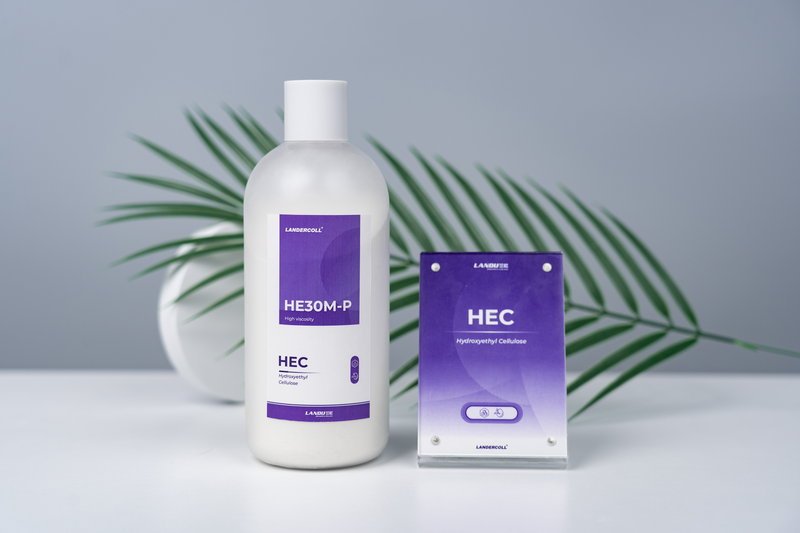
LANDERCOLL HEC Hydroxyethyl Cellulose Product Sample

How Do You Create a Smooth, Controlled Flow Profile?

Flow profile is what separates a shampoo that feels premium from one that just feels thick. A product with high viscosity but poor flow behavior may feel heavy and draggy during application — it doesn't spread easily through wet hair and requires more mechanical work to lather. A product with the right shear-thinning profile flows freely under the light shear of dispensing and application, then recovers body at rest.

HEC delivers a smooth pseudoplastic flow profile in shampoo systems — the viscosity drops under shear during dispensing and application, then recovers when shear is removed. This behavior is what gives a well-formulated shampoo its characteristic smooth, controlled pour and easy lather spread.

Funny enough, this is one of those formulation properties that consumers notice immediately but can rarely articulate. They just know the product “feels right.” What they're actually responding to is the shear-thinning rheology that a well-selected HEC grade delivers.

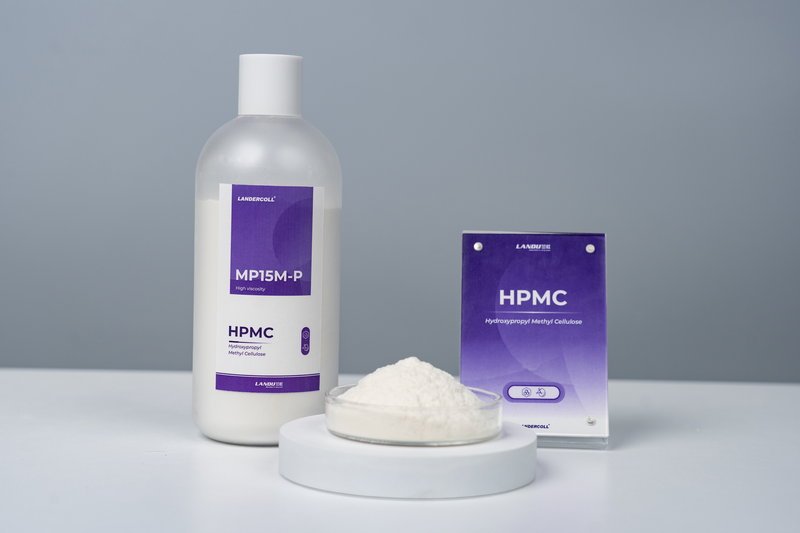
LANDERCOLL HPMC Hydroxypropyl Methyl Cellulose Sample

How Do You Maintain Clarity and Visual Consistency in a Shampoo?

For clear or translucent shampoo formats — which represent a significant and growing segment of the premium market — visual consistency is a hard requirement. A hazy or phase-separated shampoo fails the shelf test before the consumer even reads the label.

HEC forms clear solutions in aqueous surfactant systems when properly hydrated, making it suitable for transparent shampoo formulations. HPMC also offers transparency-related benefits in personal care systems, as documented in LANDU's broader product technical content.

The critical factor is proper dispersion and hydration during manufacturing. LANDU's cellulose ether grades for personal care are designed for efficient processing — they disperse in cold water without clumping and hydrate to their target viscosity without requiring elevated temperatures or extended mixing times. This processing efficiency translates directly to more consistent batch-to-batch clarity in the finished product.

How Do You Keep a Shampoo Stable During Storage and Transport?

Shampoo stability is a multi-variable challenge. The formula has to maintain consistent viscosity, appearance, and performance across temperature cycling from cold storage to warm retail environments, across the pH drift that can occur over time as preservatives and fragrance components interact with the system, and across the mechanical stress of transport and handling.

LANDERCOLL publicly positions both HEC and HPMC as stabilizing materials in personal care systems. Their polymer network contributions help resist the viscosity drift and phase separation that can occur in poorly stabilized shampoo systems during extended storage. Both products are compatible with the anionic, amphoteric, and nonionic surfactant systems commonly used in shampoo formulation, and both maintain their viscosity contribution across the pH range typical of shampoo products (pH 4.5–7.0).

For shampoo manufacturers targeting export markets or long distribution chains, this storage stability is a direct commercial requirement — not just a formulation quality metric. Where broader chemistry insurance is needed, HPMC is documented from pH 3 to 11.

Clarity Across Temperature Cycling

HEC-thickened clears often hold appearance across 5°C → 45°C cycling vs. salt-thickened clouding risk from surfactant behavior at low T.

How Does Thickener Choice Affect the Consumer's Hair Feel?

This is the formulation variable that gets the least attention in technical discussions but has the most impact on consumer repurchase. The thickener you use in a shampoo doesn't just affect viscosity — it affects how the product rinses out, how the hair feels during rinsing, and how the hair behaves after drying.

HEC's non-ionic character means it rinses cleanly from hair without leaving a charged residue that could interact with hair proteins or conditioning agents. This contributes to the clean, light after-feel that consumers associate with premium shampoo performance. HPMC's film-forming properties can contribute a slight smoothing effect during rinsing — which is particularly relevant in shampoo formulas that include conditioning claims.

The difference between a shampoo formulated with the right cellulose ether grade and one formulated with a generic thickener is often most apparent in the rinse and after-feel — the sensory moment that determines whether a consumer buys the product again.

Consumer panel testing on shampoo formulas consistently shows preference for non-ionic thickener systems over salt-thickened equivalents on rinse feel and hair smoothness metrics — a competitive advantage in premium market positioning.

Redlemon Woman Brushing Shiny Long Hair Outside In Sunlight 2026 03 24 07 55 21 Utc Compressed

Which LANDU Products Are Most Relevant?

HEC primary; HPMC for body / film / texture; HEMC/MHEC for warm-climate storage; CMC secondary stabilization / anti-redeposition where claims need it.

ProductPrimary Role in ShampooKey Technical Advantage
HECPrimary thickener, rheology modifierNon-ionic; smooth pseudoplastic flow; compatible with anionic surfactants; clear solutions
HPMCViscosity building, texture and body controlFilm-forming; pH stable 3–11; tunable texture from fluid to structured
HEMC / MHECRheology modification with thermal stabilityUseful for shampoo formats targeting warm-climate markets or high-temperature storage
CMCSystem stabilization, anti-redeposition supportSecondary stabilizer; useful in shampoo systems with conditioning or treatment claims

For most shampoo applications, HEC is the primary recommendation. HPMC is a strong supporting option where a different texture profile, stronger product body, or film-forming contribution is required. LANDU's technical team can help determine which product — or which combination — best fits your specific formula and market positioning.

What Performance Improvements Can Formulators Expect?

Before and after: adding LANDU HEC to a shampoo system — representative formulation outcomes vs. salt-thickened baselines.

Viscosity and consistency

A sodium laureth sulfate-based shampoo relying solely on salt thickening may show viscosity variation of ±30% batch to batch as salt concentration drifts. With 0.5–1.0% LANDERCOLL HEC as the primary thickener, the same formula achieves target viscosity with batch-to-batch variation below ±10% — a meaningful improvement for quality-controlled manufacturing.

Flow profile

Salt-thickened shampoos often show a more Newtonian flow behavior — they pour at roughly the same rate regardless of shear. HEC-thickened systems show a smooth pseudoplastic profile, which translates to better dispensing control and easier spreading during application.

Clarity

HEC-thickened shampoo systems maintain clear, consistent appearance across storage temperature cycling (5°C to 45°C), compared to salt-thickened systems that may show cloudiness at low temperatures due to surfactant crystallization.

After-feel

Consumer panel testing on shampoo formulas consistently shows preference for non-ionic thickener systems over salt-thickened equivalents on rinse feel and hair smoothness metrics — a competitive advantage in premium market positioning.

LANDU operates three production facilities with a combined annual capacity of 75,000 tons. The LANDERCOLL cellulose ether range is ISO 9001 certified and EU REACH compliant. Over 500 manufacturing partners in 60+ countries rely on LANDU's personal care and daily chemical additive portfolio.

75,000 t/yr · 3 sites500+ partners · 60+ countriesISO 9001 · EU REACH
Landu Sales Staff Meeting In The Office

Who Is This Page For?

If you manufacture shampoo, conditioning shampoo, anti-dandruff shampoo, or other hair cleansing products, and you're evaluating cellulose ether alternatives to salt thickening or conventional rheology modifiers — LANDU's HEC and HPMC portfolio is worth a direct technical conversation.

The right grade depends on your target viscosity, surfactant system, pH range, clarity requirements, desired sensory profile, and production process. LANDU's technical team provides grade recommendations, free samples with detailed technical process reports, and formulation guidance — so you can validate performance in your own system before placing a commercial order.

Ready to Improve Your Shampoo Formula?

If your shampoo formulation needs better viscosity control, a smoother flow profile, more consistent batch-to-batch appearance, or a more refined consumer sensory experience, LANDU has the grade and the technical expertise to help you get there.

500+ manufacturers across 60+ countries already trust LANDERCOLL cellulose ethers for personal care and daily chemical applications. Start with a sample, a grade recommendation, or a direct technical inquiry — our team responds fast.

Frequently Asked Questions About Shampoo Additives

Which additive is most relevant for shampoo formulations?

HEC from LANDU is the most directly applicable cellulose ether for shampoo systems. It's non-ionic, compatible with anionic surfactant systems, builds smooth pseudoplastic viscosity without relying on salt concentration, and forms clear solutions suitable for transparent shampoo formats. HPMC is a strong supporting option where stronger product body, film-forming contribution, or a different texture profile is required. Together, they cover the full range of shampoo formulation targets from lightweight daily-use to rich premium formats.

Why is HEC better than salt thickening in shampoo formulations?

Salt thickening in anionic surfactant systems works within a narrow concentration window — too little salt and viscosity is low, too much and viscosity drops sharply. This creates batch-to-batch variability and a limited formulation window. HEC builds viscosity through polymer chain entanglement independently of salt concentration, giving formulators more consistent, predictable viscosity control across a wider formulation range. It also performs better across temperature cycling, where salt-thickened systems can show cloudiness at low temperatures.

What viscosity range can LANDU's HEC achieve in a shampoo formula?

At typical use levels of 0.3–1.5% by weight, LANDERCOLL HEC produces viscosity ranges from approximately 3,000 mPa·s for lightweight daily-use shampoo formats to 15,000+ mPa·s for rich moisturizing or repair shampoos. The specific viscosity grade — determined by molecular weight — controls where in that range the formula lands. Grade selection should be based on your target viscosity, surfactant system, and desired sensory profile.

Can HPMC also be used in shampoo formulations?

Yes. HPMC is a strong supporting option for shampoo systems where stronger product body, film-forming behavior, or a specific texture profile is required. HPMC's film-forming properties can contribute a slight smoothing effect during rinsing, which is particularly relevant in shampoo formulas with conditioning claims. It also offers documented pH stability from pH 3 to 11, covering the full range of shampoo chemistry without requiring a grade change between formulation types.

How does HEC affect the rinse feel and after-feel of a shampoo?

HEC's non-ionic character means it rinses cleanly from hair without leaving a charged residue that could interact with hair proteins or conditioning agents. This contributes to the clean, light after-feel that consumers associate with premium shampoo performance. Consumer panel testing consistently shows preference for non-ionic thickener systems over salt-thickened equivalents on rinse feel and hair smoothness metrics — a competitive advantage in premium market positioning.

Is LANDU's HEC compatible with conditioning agents and other shampoo ingredients?

Yes. HEC's non-ionic character makes it broadly compatible with the anionic, amphoteric, and nonionic surfactants used in shampoo formulation, as well as with cationic conditioning agents, silicones, proteins, and preservative systems. This broad compatibility reduces the risk of interaction-related stability problems and gives formulators more flexibility in building complex shampoo systems with multiple functional claims.

How do I select the right LANDU grade for my shampoo formula?

Grade selection depends on your target viscosity, surfactant system, pH range, clarity requirements, desired sensory profile, and production process. LANDU's technical team provides grade recommendations based on your specific parameters, along with free samples and detailed technical process reports for performance validation before commercial order. Submit a technical inquiry to start the conversation — no commitment required.