What Is HEC?
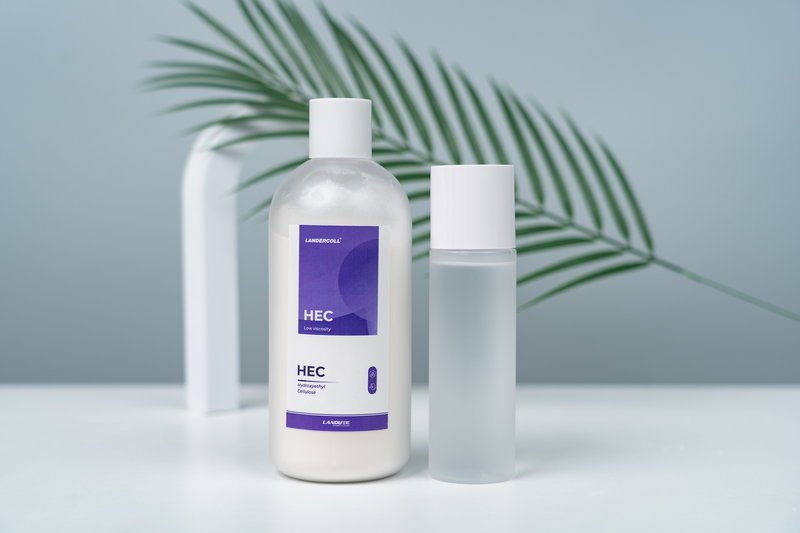
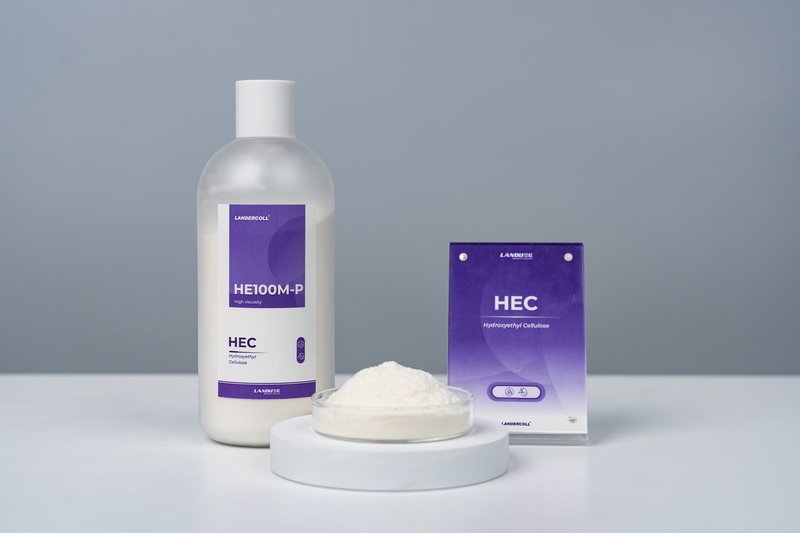
Hydroxyethyl Cellulose (HEC) is a non‑ionic, water‑soluble polymer derived from cellulose and widely used as a multifunctional additive in daily chemical products.
LANDERCOLL publicly describes HEC as a material used as a thickener, stabilizer, binder, film former, and water‑retention agent. In formulation practice, HEC is especially valued where customers need smooth rheology, stable viscosity, better flow control, texture consistency, and a clean, more balanced product profile.
Because of this, HEC is often considered a key cellulose ether option in systems where product appearance, user feel, and long‑term stability matter alongside technical performance.



Why HEC Matters
in Daily Chemicals
Daily chemical formulations often need more than viscosity alone. They need a rheology profile that remains controlled through production, filling, storage, and consumer use. They may also need a cleaner visual profile and a better balance between product body and flow.
LANDERCOLL's public HEC content highlights its use as a thickener and stabilizer, and its personal care page lists HEC as suitable for shampoos, body washes, conditioners, hand sanitizers, facial cleansers, and lotions.
This makes HEC an especially practical choice for customers looking for a cellulose ether that supports both technical stability and superior product feel while maintaining excellent compatibility with modern surfactant systems.
What HEC Does
in Your Formulation

Thickening
LANDERCOLL publicly identifies HEC as a thickener, useful for building viscosity and controlling product body in liquid and semi‑liquid systems with smooth, non‑stringy flow.
Stabilization
HEC is publicly positioned as a stabilizer, supporting formulation consistency and overall system balance during storage and temperature fluctuations.

Binding & Film Formation
LANDERCOLL describes HEC as a binder and film former, supporting products where texture, structure, skin feel, and long‑term integrity need to remain controlled.

Water Retention
Public LANDERCOLL content includes water‑retention agent as one of HEC's functional roles — adding to its usefulness in balanced systems where moisture management and reduced drying matter.
HEC vs Other Thickeners
Comprehensive Comparison
Understanding how HEC performs relative to other cellulose ethers and common thickeners helps formulators choose the right polymer for their texture and rheology goals.
| Thickener | Smooth Rheology | Water Retention | Salt Tolerance | Film Forming | Clarity in Gels | Sustainability | Best For | Main Limitation |
|---|---|---|---|---|---|---|---|---|
| LANDERCOLL HEC | Excellent | Good | Good | Good | Excellent | High | Shampoos, Body Wash, Lotions, Sanitizers | Lower max viscosity than HPMC |
| HPMC | Good | Excellent | Excellent | Excellent | Good | High | Detergents, Rich Creams | Slightly less smooth flow |
| HEMC / MHEC | Good | Excellent | Excellent | Good | Good | High | Toothpaste, Balanced Systems | Narrower viscosity range |
| CMC | Fair | Good | Poor | Fair | Fair | Medium | Basic Detergents | Sensitive to salts and pH |
| Xanthan Gum | Poor | Poor | Excellent | Poor | Poor | High | Suspensions | Reduces foam, slimy texture |
Summary: LANDERCOLL® HEC stands out for its excellent smooth rheology, high clarity in gels, and clean sensory profile. It is frequently preferred in personal care when a non‑stringy, elegant texture and good compatibility with surfactants are priorities.
HEC Specification Overview
For webpage‑level product evaluation, customers want clear basic parameters. Here are the key publicly referenced specification values.
| Item | Reference Value | Meaning for Buyers |
|---|---|---|
| Product Name | Hydroxyethyl Cellulose | Key cellulose ether for rheology and texture support |
| Product Type | Non‑ionic, water‑soluble polymer | Suitable for smooth thickening and stable systems |
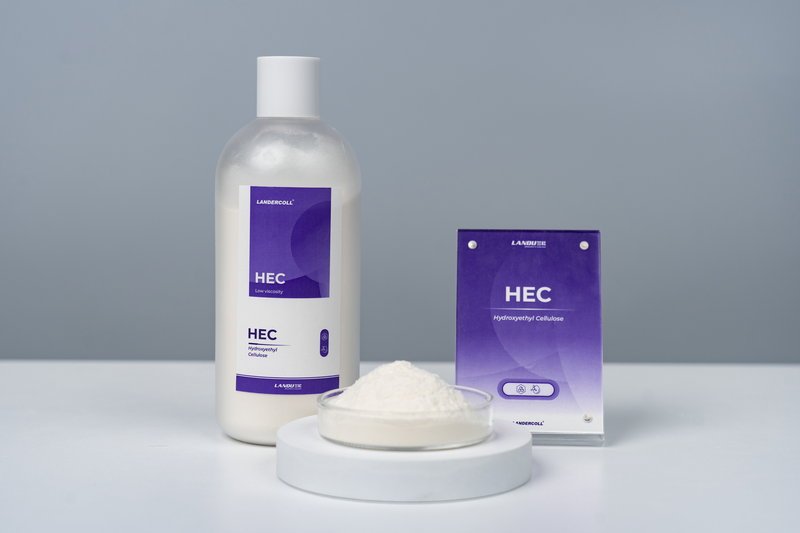
| Appearance | White or off‑white powder | Basic raw‑material identity reference |
| Moisture Content | ≤ 6% | Important for powder handling and storage |
| Ash Content | ≤ 5% | Useful quality reference related to purity |
| pH Value | 6 – 8 | Relevant for formulation compatibility |
| Viscosity Range | 100 – 100,000 mPa·s | Main parameter affecting flow and body |
| Shelf Life | 2 – 3 years | Useful for storage and inventory planning |
Based on LANDERCOLL's public HEC references. Treat as a general guide — specific TDS will be provided for the chosen grade.
How to Understand the Main Parameters
Appearance
LANDERCOLL describes HEC as white or off‑white powder. Uniform color typically indicates high purity and consistent manufacturing quality.
Moisture Content
The ≤ 6% reference matters because moisture affects powder storage, handling, risk of caking, and long‑term consistency. Lower moisture supports better dissolution and reduced microbial risk.
Ash Content
Ash ≤ 5% gives buyers an additional quality screening parameter. Lower ash generally correlates with higher purity and fewer inorganic residues in sensitive personal care systems.
pH Value
The pH 6–8 reference is useful because pH compatibility matters when evaluating a cellulose ether for a specific formulation environment. HEC performs well across a broad pH range.
Viscosity
One of the most important parameters — 100–100,000 mPa·s strongly affects product flow, body, sensory structure, and dispensing behavior, allowing selection from light lotions to richer textures.
Shelf Life
The 2–3 years reference supports storage and inventory planning. When stored correctly in sealed conditions, HEC maintains its performance properties throughout the shelf life.
Disperse HEC slowly into well‑stirred water at room temperature. Pre‑blending with other dry ingredients or using high‑shear mixers helps prevent fish‑eye formation and ensures lump‑free solutions.
Available HEC Grades
by Viscosity Direction
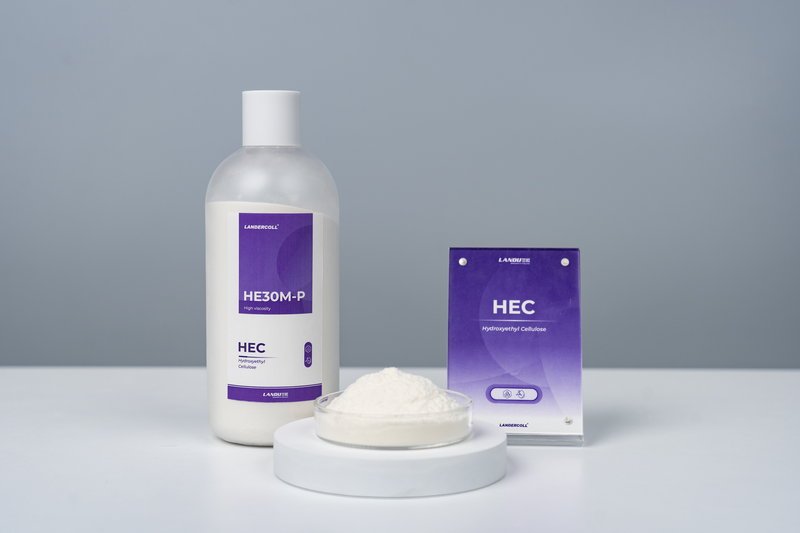
HEC is available in multiple viscosity directions. The final choice depends on the target product system, desired texture, and formulation requirements.
 01
01
Lower to Medium Viscosity
More suitable where smoother flow, lighter product body, or easier dispensing is needed — facial cleansers, light lotions, hand sanitizers, and surface sprays.
 02
02
Medium to Higher Viscosity
More suitable where stronger thickening, richer structure, or more controlled rheology is required — shampoos, conditioners, body washes, and structured gels.
HEC Applications
in Daily Chemicals
HEC is most strongly relevant to personal care and selected home care systems — delivering smooth rheology, clean aesthetics, and stable performance across multiple categories.


HEC for Personal Care
HEC is especially relevant in personal care products where customers want smoother rheology and better product feel. LANDERCOLL's personal care guidance positions it for shampoos, conditioners, body washes, lotions, facial cleansers, and hand sanitizers.
Shampoo & Conditioner
0.2–0.6% medium viscosity HEC delivers smooth flow, stable viscosity, excellent clarity, and improved wet combability.
Body Wash & Facial Cleanser
0.3–0.8% provides rich yet non‑stringy texture, stable foam, and pleasant skin feel across wash‑off systems.
Hand Sanitizer & Lotions
Offers clear gels with smooth after‑feel and good water retention — supporting clean beauty and sustainable formulations.
 Home Care
HEC for Home Care
Although HEC is emphasized more strongly in personal care, it is also relevant to selected home care formulations where smooth thickening and stable flow behavior are important.
Liquid Detergents & Floor Cleaners
0.1–0.4% HEC improves pourability, stabilizes viscosity, and enhances wetting properties on surfaces.
Disinfectants & Sprays
Supports uniform spray pattern and cling time while maintaining clarity in the final product.
Packaging
Paper‑plastic composite bag or equivalent export packaging, depending on final grade and shipment arrangement. Larger bulk packaging available upon request.
Storage & Handling
- Store in a cool, dry, well‑ventilated place (recommended <25 °C)
- Keep packaging sealed before use
- Protect from moisture and sunlight
- Follow shelf‑life guidance (2–3 years)
- Implement FIFO inventory management
How to Choose
the Right HEC
Choosing the right HEC usually depends on several interacting variables:
- Application type — shampoo, lotion, cleanser, sanitizer, detergent
- Target viscosity — the desired thickness, body, and flow profile
- Texture goal — smooth and clear vs. richer and more structured
- Flow behavior — dispensing, pourability, spreadability requirements
- Formulation structure — surfactant type, pH, electrolyte level
- Stability expectations — shelf‑life, temperature range, seasonal variation
HEC selection is best supported by Application Guide, Recommended Grade Table, Technical Data Sheets, and Product Selection Support.
Selection Resources
Application Guide Recommended Grade Table Product Comparison Table Contact Technical SupportSample Request &
Technical Guidance
What We Provide
- Product recommendation based on your specific application
- Technical documentation and TDS requests
- Grade comparison support and sample delivery
- Formulation guidance tailored for testing
Before Requesting a Sample
To improve sample accuracy, please share:
- Application type and product category
- Target viscosity and desired texture
- Formula structure and surfactant system
- Key priorities (clarity, foam, sustainability)
Why Choose
LANDERCOLL® HEC
Multifunctional Performance
LANDERCOLL publicly positions HEC as a thickener, stabilizer, binder, film former, and water‑retention agent — a broad and credible functional profile for diverse formulations.
Strong Personal Care Relevance
Public guidance explicitly links HEC to shampoos, conditioners, body wash, sanitizers, lotions, gels, and facial cleansers with practical formulation recommendations.
Transparent Public Parameters
LANDERCOLL provides public reference values for appearance, moisture, ash, pH, viscosity, packaging, and storage — strengthening trust for professional buyers.
Manufacturing & Sustainability
5,000 MT / year dedicated HEC capacity. As a renewable cellulose‑derived material, it aligns with green chemistry and clean beauty trends.
Frequently Asked Questions
What is HEC used for in daily chemical products?
HEC is used as a thickener, stabilizer, binder, film former, and water‑retention agent. LANDERCOLL positions it for shampoos, conditioners, body wash, hand sanitizers, lotions, gels, facial cleansers, and selected detergents.
What are the main parameters of HEC?
Key public reference parameters include appearance (white or off‑white powder), moisture (≤ 6%), ash (≤ 5%), pH (6–8), viscosity (100–100,000 mPa·s), and shelf life (2–3 years).
What packaging is commonly used for HEC?
LANDERCOLL publicly lists 25 kg bags as common packaging. Larger formats are available for bulk orders.
How should HEC be stored?
Store in a cool, dry place (<25 °C), protect from moisture and sunlight, and keep packaging sealed. Use FIFO inventory rotation.
Which applications are most relevant to HEC?
HEC is most relevant to personal care (shampoo, conditioner, body wash, sanitizer, lotion, facial cleanser) and selected home care systems (liquid detergents, floor cleaners, disinfectants).
What is the difference between HEC and HPMC?
HEC typically provides smoother, clearer rheology and is preferred for elegant personal care textures. HPMC offers stronger water retention and higher maximum viscosity, making it better for richer creams and detergents.
How to dissolve HEC without forming lumps?
Disperse powder slowly into well‑stirred room‑temperature water. Pre‑blending with other dry ingredients or using high‑shear mixing equipment is highly recommended.
Is HEC suitable for clear gel products?
Yes. Selected grades of HEC are known for excellent optical clarity, making them ideal for hand sanitizers, facial gels, and transparent lotions.
What is the typical dosage of HEC?
Typical dosage ranges from 0.1% to 1.0%, depending on target viscosity, formulation type, and desired texture. Lab testing is recommended for optimal results.
Is HEC compatible with high surfactant systems?
Yes. Its non‑ionic nature provides good compatibility with anionic, non‑ionic, and amphoteric surfactants commonly used in shampoos and body washes.
Does HEC support sustainability and clean beauty trends?
Yes. Derived from renewable cellulose, HEC is biodegradable and aligns well with green chemistry and clean beauty formulation standards.
Can HEC be used in toothpaste or oral care?
While primarily positioned for personal care, HEC can serve as a binder and stabilizer in selected oral care formulations where smooth rheology is desired.
What is the shelf life after opening?
When stored correctly in sealed conditions, HEC maintains performance for the full 2–3 years. Avoid prolonged exposure to humidity.
Do you provide technical support for HEC formulation development?
Yes. Our team offers grade recommendation, TDS, application guidance, stability advice, and sample support to help accelerate development and reduce formulation risks.
Smooth Rheology, Stable Performance —
A Versatile Cellulose Ether Direction
LANDERCOLL® HEC is a versatile cellulose ether option for customers who need smooth thickening, stable rheology, and better formulation balance in daily chemical systems. Supported by public references to viscosity control, stabilization, binding, film formation, and water retention, as well as clear reference parameters, HEC offers a strong solution direction for modern home care and personal care formulations.
If you are developing shampoos, conditioners, body washes, hand sanitizers, lotions, facial cleansers, or selected cleaning products, HEC can provide a reliable starting point for improving texture, stability, sensory profile, and overall formulation performance.
Need HEC Specifications, Sample Support,
Grade Recommendations, or Formulation Guidance?
Contact our team for technical documentation, application support, sustainability data, and competitive quotation.
All information is based on LANDERCOLL public references and industry best practices. For exact specifications of each grade, please request the latest TDS.